Wax Hunters: Inside the Obsessive World of Rare Electronic Vinyl Collecting
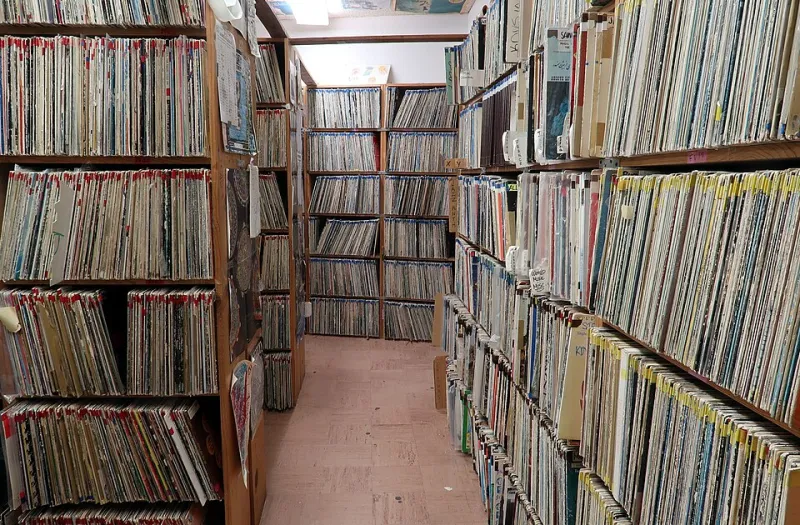
Photo: Melikamp, CC BY-SA 4.0, via Wikimedia Commons
Marcus has a system. Every Saturday morning, before most people have finished their first cup of coffee, he's already hit two thrift stores and a flea market in the suburbs outside Chicago. He's not looking for anything in particular — that's not how it works. He's looking for everything, flipping through records at a pace that looks casual but is actually the result of years of pattern recognition. Label colors. Catalog numbers. The particular look of a sleeve that was pressed in limited quantities by a small operation that probably didn't survive the 1990s.
"Most weeks I come home with nothing," he tells us, laughing. "But then you find something that pays for a hundred empty mornings, and you remember why you do it."
Marcus is part of a collector community that's grown steadily over the last decade — people obsessively hunting for rare, out-of-print electronic and experimental vinyl. And while the stereotype of the record collector still leans toward classic rock and jazz, the market for obscure electronic pressings has quietly become one of the most active and financially significant corners of the vinyl resale world.
Why Electronic Vinyl Specifically?
It's a fair question. What makes a pressing of a Detroit techno 12-inch or an early IDM release from a British imprint worth hundreds — sometimes thousands — of dollars?
The short answer is scarcity plus cultural significance plus sound quality, and all three of those factors tend to converge in electronic music's independent release history in interesting ways.
A lot of the most important electronic music from the 1980s and 1990s was released in genuinely tiny quantities. Early Chicago house records, Detroit techno 12-inches, the first wave of UK rave and hardcore releases — these weren't distributed through major channels. They were pressed in runs of a few hundred copies, sold out of car trunks and at record shops that no longer exist, and played until they wore out. What survived is genuinely rare.
Beyond scarcity, there's a strong audiophile argument for these records. Vinyl mastered directly from analog sources — especially from the pre-digital era or from producers who insisted on analog signal chains — can offer a warmth and low-end presence that digital formats struggle to replicate. For electronic music, where the bass and sub-bass frequencies are often the whole point, that distinction matters.
"I have a Trax Records 12-inch that I've had digitized at high resolution," says Priya, a collector based in Brooklyn who's been building her collection for about eight years. "And even the best digital transfer doesn't fully capture what it sounds like on a decent turntable setup. There's something in the low end that just isn't there in the file. That's not nostalgia. That's physics."
The Ecosystem: Discogs, Local Shops, and the Discord Underground
The infrastructure supporting this market has gotten genuinely sophisticated. Discogs remains the dominant marketplace for buying and selling rare vinyl, and its database — crowdsourced over more than two decades — is an extraordinary resource. You can look up pressing information, track sales history, and get a real sense of market value for almost any release. For collectors, it's indispensable.
But Discogs is also a double-edged sword. The platform's transparency has made it harder to find underpriced gems from sellers who don't know what they have, because anyone with a smartphone can check a record's value in thirty seconds. The real opportunities, collectors say, increasingly exist offline.
Local record shops remain important, particularly in cities with strong electronic music histories. Chicago, Detroit, New York, and Los Angeles all have shops that maintain serious electronic sections and relationships with collectors who bring in material. Estate sales and thrift stores — Marcus's hunting grounds — can still yield finds, though the odds have gotten longer as more people know what to look for.
And then there's the online community layer. Private Discord servers, Reddit communities like r/vinyl and more specialized electronic music subs, and Instagram accounts dedicated to collection documentation have created a network where information — and sometimes records — move quickly. These communities are where you learn which catalog numbers matter, which pressings to avoid (bootlegs are a real problem in certain genres), and who's selling what.
What's Actually Worth Hunting
Not all rare electronic vinyl is equal, and part of developing as a collector is understanding which genres and labels hold the most consistent value.
Detroit Techno: First-generation releases on labels like Transmat, KMS, and Metroplex are the gold standard. Original pressings of early Derrick May, Kevin Saunderson, and Juan Atkins productions regularly fetch serious money. The challenge is authentication — bootlegs of the most valuable titles circulate widely.
Chicago House: Early Trax Records and DJ International releases occupy a similar position. The label history is complicated (Trax in particular has a messy repress history), so knowing which pressings are original matters enormously.
UK Electronic and Rave: Labels like Warp's early catalog, early Aphex Twin releases on R&S and Sire, and first-wave hardcore and jungle 12-inches have all appreciated significantly. Warp releases in particular have a strong collector following in the US.
Experimental and Noise: This is a wilder market. Releases from labels like Mego, Touch, and various Japanese noise imprints (Alchemy, PSF) can command premium prices among a smaller but deeply committed collector base.
Industrial: Early Factory Records, Throbbing Gristle on Industrial Records, and first pressings from the American industrial scene (Wax Trax! releases especially) have seen consistent appreciation.
Tips for Getting Started Without Getting Burned
Every experienced collector has a story about paying too much for a bootleg or missing a deal because they didn't know what they were looking at. Here's what the veterans say:
Learn the catalog numbers. For the genres you care about, catalog numbers are your primary authentication tool. Original pressings almost always have specific catalog number formats that differ from represses and bootlegs. Discogs is your reference.
Condition matters more than you think. A near-mint copy of a moderately rare record is often worth more than a beat-up copy of something rarer. Grading standards exist for a reason — learn them.
Buy what you love, not just what's valuable. The collectors who've been doing this for twenty years consistently give the same advice: if you're buying purely as an investment, you'll make mistakes you wouldn't make if you actually cared about the music. Passion is a better guide than price guides.
Build relationships. The best deals — and the best information — tend to flow through personal connections. Get to know the staff at your local shops. Engage genuinely in online communities. Show up at record fairs. The ecosystem rewards participation.
The Long Game
Priya has a shelf she calls her "never sell" collection — about forty records she's accumulated over eight years that she considers genuinely irreplaceable. Not necessarily the most valuable ones, though some are. The ones that mean something.
"At the end of the day, this music shaped how I understand sound," she says. "Having the physical object — the thing that existed at the moment this music was made and released into the world — feels important in a way that's hard to explain to someone who doesn't get it."
That's probably the truest thing you can say about why people hunt for these records. The market is real, the money is real, and the scarcity is real. But underneath all of it is just music that mattered enough that people couldn't let it disappear.