Sound From Every Direction: How 3D Audio Is Rewiring the Way We Hear Electronic Music
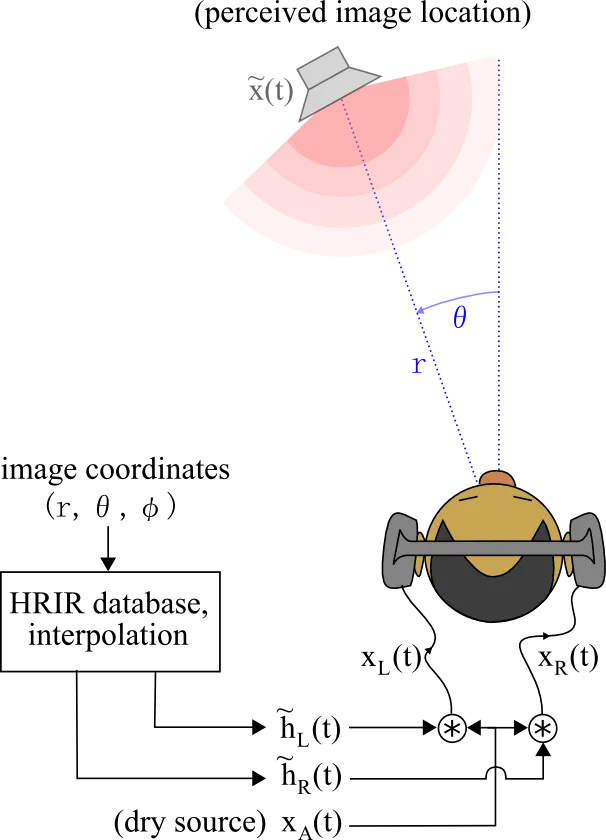
Photo: Unknown, CC BY-SA 3.0, via Wikimedia Commons
For most of recorded music's history, we've been listening to a flat picture. Left channel, right channel, maybe a little center — stereo has served us well, but it's always been a kind of polite fiction. Real sound doesn't work that way. In actual life, audio comes at you from every conceivable angle: birds overhead, traffic behind you, a conversation filtering through a wall to your left. Stereo was always a compression of that reality into something a pair of speakers could manage.
That compression is starting to feel less acceptable to a growing wave of experimental and electronic artists. And with tools like ambisonics and Dolby Atmos now accessible outside of major studio budgets, the walls of the stereo field are genuinely coming down.
What Even Is Spatial Audio?
The umbrella term "spatial audio" covers a handful of related but distinct technologies. Dolby Atmos — originally developed for cinema — has become the most consumer-facing of the bunch, now baked into Apple Music, Tidal, and even some Amazon Music tiers. It works by encoding audio as "objects" that can be positioned anywhere in a three-dimensional sphere, with playback systems (or headphone processing algorithms) rendering that position dynamically.
Ambisonics is a different beast, and in many ways a more philosophically interesting one for experimental producers. Rather than placing discrete objects in space, ambisonics captures or synthesizes a full 360-degree sound field as a mathematical representation — a kind of acoustic hologram. First-order ambisonics uses four channels; higher-order formats (HOA) scale up dramatically in resolution. The result, when decoded properly, is something closer to being inside a sound than listening to one.
Then there's binaural audio, which uses head-related transfer functions (HRTFs) to simulate spatial placement over standard headphones. It's the most accessible format for listeners and the one most indie producers are currently experimenting with, since it requires no special speaker setup on the listener's end.
Why Electronic Music Is the Perfect Proving Ground
The interesting thing about spatial audio in the context of electronic and experimental music is that the genre has always been obsessed with sound design at the molecular level. Producers who spend hours sculpting a single synth patch aren't going to hear "you can now put that patch above the listener's head" and shrug. For a lot of folks working in ambient, drone, noise, and modular synthesis, spatial audio isn't a gimmick — it's a logical extension of what they were already trying to do.
Take the ambient tradition stretching from Brian Eno through Stars of the Lid and into the current generation of artists on labels like Kranky or Bedroom Community. The whole project of that music has been about environment — creating a sense of place, of being submerged in something larger than yourself. Stereo was always a workaround. Spatial audio is closer to the actual goal.
Modular synthesizer artists have been particularly quick to embrace the format. The modular world already treats signal routing as a kind of spatial puzzle, and tools like the Mutable Instruments Rings or various reverb modules have long been about simulating physical acoustic spaces. Extending that into genuine three-dimensional placement is a natural next step.
Tools Independent Producers Are Actually Using
So what does this look like in practice for someone working outside a major label budget? The good news is that the barrier to entry has dropped significantly in the last few years.
Reaper with the IEM Plugin Suite has become something of a go-to for budget-conscious ambisonics work. The IEM (Institute of Electronic Music and Acoustics) plugins are free, open-source, and genuinely powerful — covering everything from ambisonic encoding to binaural monitoring. Paired with Reaper's flexible routing, it's a legit spatial audio workstation for the cost of a Reaper license.
Dolby Atmos Music is trickier. Dolby's official tools require licensing fees that aren't trivial for a micro-label operation. However, Apple's Logic Pro now includes a built-in Dolby Atmos renderer, which has opened the format up to a much wider pool of producers. If you're already in the Apple ecosystem, the path to releasing a spatial audio mix on Apple Music is genuinely navigable without enterprise-level investment.
Spat Revolution from IRCAM is the premium option — expensive, but extraordinarily capable, and increasingly used for live spatial audio performance installations.
For binaural specifically, free and low-cost options abound. Facebook's (now Meta's) 360 Spatial Workstation, Waves Nx, and various convolution reverb approaches using publicly available HRTF datasets all give producers workable tools for headphone-based spatial design.
Listening in Three Dimensions: What to Actually Check Out
If you want to experience what's possible right now, a few releases are worth going out of your way to find in their spatial versions.
Search out ambient and drone releases on Apple Music with the Atmos badge — the format genuinely shines on slow-moving, texturally rich material where the added dimensionality has room to breathe. Some electronic artists releasing through Bandcamp are also including binaural mixes as bonus files, which is worth looking for in download packages.
For the full ambisonics experience, you'll need either a proper speaker array (a first-order setup needs at least four speakers, ideally eight or more for HOA) or a good pair of headphones and a binaural decoder. The latter is the practical choice for most listeners. Grab a pair of open-back headphones with a reasonably flat response, find a binaural decode plugin or app, and you're most of the way there.
Also worth noting: YouTube supports ambisonic video audio, and a significant amount of spatial audio content lives there — search for "ambisonics music" or "binaural electronic" and you'll find producers actively experimenting in public.
The Compositional Shift Is Real
Here's what's genuinely exciting from a creative standpoint: spatial audio isn't just a new delivery format. It changes how you compose. When sound can move overhead or circle behind the listener, the relationship between rhythm, texture, and space becomes a completely different design problem. Elements that would compete in a stereo mix can coexist when they're separated in the Z-axis. Tension and release can be expressed through spatial movement rather than just volume or frequency.
Producers working in this space talk about needing to rethink their entire arrangement logic. The old habits — carving out frequency space with EQ, using panning to separate elements left and right — don't disappear, but they become one set of tools among many. You're suddenly thinking about elevation, about whether a sound is near or far, about how it moves through the room over time.
For experimental electronic music in particular, that's a genuinely new compositional vocabulary. And given how much of this genre has always been about pushing past the limits of conventional listening, it feels like a pretty natural place to end up.
The stereo field had a good run. But sound was always bigger than two channels could hold.