Feel the Rumble: How Producers Are Harnessing Infrasound to Move You From the Inside Out
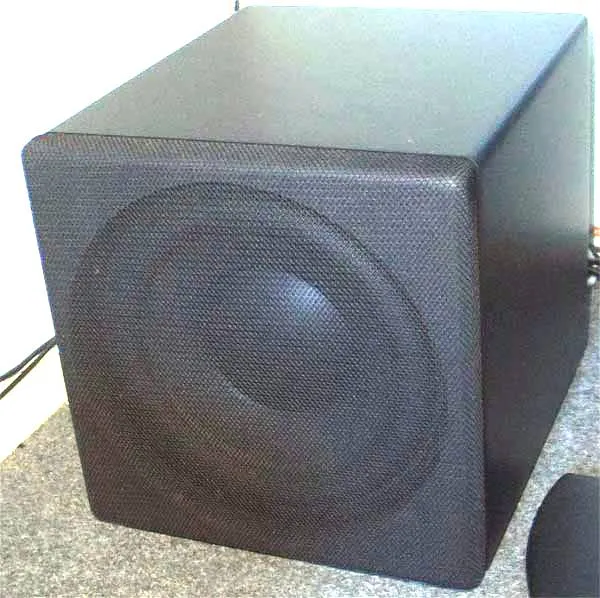
Photo: Unknown, CC BY-SA 3.0, via Wikimedia Commons
There's a frequency range most of us will never consciously register. It sits below 20 Hz — the rough lower boundary of human hearing — and yet it's increasingly showing up in the toolkit of forward-thinking electronic producers across the US and beyond. This is infrasound territory, and the artists working down here aren't chasing something you'll hum on the way home. They're after something far more primal.
What Exactly Is Infrasound?
To put it simply: infrasound is sound that vibrates too slowly for your ears to process as a distinct pitch. The human auditory system generally picks up frequencies between 20 Hz and 20,000 Hz, though that range narrows considerably as we age. Anything below that 20 Hz floor technically falls outside what we'd call "hearing." But the body? The body doesn't care about those boundaries.
Infrasonic frequencies interact with the physical structures of your body — your chest cavity, your inner ear's vestibular system, your eyeballs (yes, really). At certain intensities, sub-20 Hz waves can induce feelings of unease, awe, disorientation, or even euphoria. Some researchers have linked infrasound exposure to reported paranormal experiences, which tells you something about just how deep this stuff can reach into your psychology without your conscious awareness catching on.
Naturally, electronic music producers noticed.
From the Lab to the Club
The crossover from acoustic curiosity to artistic tool didn't happen overnight. Bass music has been flirting with the low end for decades — dub, techno, and drum and bass producers have long understood that chest-rattling sub-bass is a core part of the live experience. But there's a meaningful difference between a 40 Hz bass note that you can technically hear and something sitting at 12 or 15 Hz that you purely feel.
Artists working in experimental club contexts, particularly in cities like New York, Chicago, and Los Angeles, have started layering true infrasonic content beneath their audible mixes. The goal isn't to replace conventional bass — it's to create a physical atmosphere that listeners can't consciously identify but absolutely register on a gut level. You don't know why the room feels heavier. You just know it does.
Sound designers working in immersive installation contexts have been even more deliberate about this. Think of large-scale sound art pieces where visitors walk through physical spaces saturated with carefully calibrated low-frequency energy. The infrasound doesn't tell you what to feel — it just opens a door, and your nervous system walks through it.
The Gear That Makes It Possible
Working with infrasound isn't as simple as just cranking the low end on your EQ. Most consumer and prosumer speakers roll off aggressively below 40 Hz, and even many professional studio monitors don't extend far into true infrasonic territory. Reproducing these frequencies requires serious transducer technology — specialized subwoofers capable of moving large amounts of air at very low speeds.
In live settings, producers are increasingly specifying custom speaker rigs or working with companies that build tactile transducer systems — devices that couple low-frequency energy directly into floors, seats, or walls rather than projecting it through the air. If you've ever been to a club and felt the bass in your feet before you heard it overhead, you've touched the edge of this world.
On the production side, plugins like Sennheiser's AMBEO tools and dedicated low-frequency oscillator modules in modular synthesis rigs let producers generate and shape sub-20 Hz content with precision. Some producers use spectrum analyzers with extended low-frequency resolution to actually see what they're creating, since they obviously can't rely on their ears alone for feedback.
The Science of Feeling What You Can't Hear
Researchers at institutions including Salford University and various acoustics labs in the US have documented measurable physiological responses to infrasonic exposure. At high enough sound pressure levels, infrasound can affect heart rate variability, trigger hyperventilation, and create a distinct sense of being watched or followed — the latter likely explains its longstanding association with ghost sightings in old buildings where HVAC systems sometimes generate infrasonic resonances.
For music producers, the interesting zone is far below those alarm-level intensities. At moderate levels, infrasound seems to prime emotional receptivity. Listeners report feeling more open, more present, and more physically engaged with music when infrasonic content is present — even when they can't identify what's different. It's essentially a mood primer that operates beneath the threshold of critical listening.
That's a genuinely powerful tool if you're trying to create an immersive experience. And it raises interesting ethical questions about transparency — are audiences consenting to be physically manipulated in ways they can't perceive? Most producers working in this space shrug at the concern, pointing out that every aspect of audio production is designed to shape emotional response. Infrasound is just doing it from a different angle.
Practical Considerations for Independent Producers
If you're an independent producer curious about incorporating infrasonic elements into your work, the first challenge is monitoring. You genuinely cannot evaluate what you can't hear, so you'll need either a spectrum analyzer plugin with a sufficiently low floor or a measurement microphone paired with analysis software like REW (Room EQ Wizard, which is free and excellent).
Second, be honest with yourself about the playback systems your audience will encounter. Infrasonic content in a track that's going to be streamed through laptop speakers or earbuds is largely irrelevant — those systems physically cannot reproduce it. This is territory that makes more sense for artists releasing on physical formats, scoring for installation contexts, or producing music specifically for high-end club systems.
That said, even subtle infrasonic layering in a track can add a kind of weight and physicality that translates partially even through imperfect playback — not as infrasound per se, but as a sense of density and space in the low end that listeners notice without being able to name.
The Underground Is Already There
The artists doing the most interesting work in this space tend not to be talking loudly about it. It's the kind of technique that loses something when it becomes a marketing bullet point. But if you attend the right club nights, walk through the right gallery installations, or spin the right limited-press records on a properly dialed system, you'll start to feel the evidence.
Infrasound isn't a gimmick. It's a reminder that music has always been a physical experience first, and that electronic production — at its most ambitious — is still finding new ways to reach you somewhere below the level of conscious thought. The frequencies beyond hearing are, it turns out, some of the most expressive ones available. You just have to feel your way toward them.