Perfectly On Time, Perfectly Dead: How the Quantize Grid Is Draining the Life From Your Tracks
There's a moment most producers know well. You've been working a loop for an hour. The kick is locked. The hats are locked. Everything is snapped, aligned, and mathematically correct. You hit play and it sounds... fine. Technically solid. Completely lifeless. You loop it again, hoping something changes. It doesn't.
The grid did its job. That's the problem.
The Seduction of Perfect Timing
When DAWs started putting quantization front and center in their toolkits, it felt like a gift. No more chasing a drummer who couldn't hold a tempo. No more painstaking manual nudging of MIDI notes. Just draw a grid, snap to it, done. Clean. Professional. Repeatable.
And for a lot of technical tasks — syncing layers, tightening up a sloppy performance, locking a bassline to a kick — quantization is genuinely useful. Nobody's arguing against that.
But somewhere along the way, the tool became the default. Then the default became the standard. And now an entire generation of producers has been trained, almost unconsciously, to treat the grid as the destination rather than a reference point. The result is electronic music that hits every beat with robotic precision and somehow manages to feel like it's going nowhere.
The grid doesn't groove. It just ticks.
What "Groove" Actually Means in Technical Terms
Here's the thing about groove that nobody in a YouTube tutorial is going to spend much time on: it's not about being on the beat. It's about where you land relative to the beat — and how consistently you land there in a way that creates forward motion.
Drummers and percussionists have known this forever. A snare that sits five milliseconds behind the grid creates pull. A hi-hat that pushes slightly ahead of the kick creates urgency. Neither is "wrong." Both are intentional. The relationship between those tiny deviations is what makes a groove feel like a groove instead of a metronome exercise.
In electronic music, those relationships get flattened the second you quantize everything to 100%. Every element lands at the exact same theoretical moment. There's no push, no pull, no conversation between elements. Just simultaneous perfection that the human brain processes as... monotony.
Researchers studying rhythmic perception have found that humans actually respond more positively to timing that contains small, controlled amounts of variation — sometimes called "microtiming" — compared to perfectly metronomic sequences. Your brain isn't looking for a clock. It's looking for a heartbeat.
The Producers Who Refused the Grid
If you want to understand what intentional imprecision sounds like at its most sophisticated, spend some time with Aphex Twin's Selected Ambient Works Volume II or anything from Autechre's mid-period catalog. These aren't records where timing "slipped." These are records where timing was weaponized.
Richard D. James has talked in various interviews about his deliberate manipulation of rhythm — using sequencers in ways they weren't designed to be used, introducing timing inconsistencies that create a kind of biological unease in the listener. It's not randomness. It's controlled deviation.
Autechre took it further with their use of custom Max/MSP patches that generated rhythmic structures too complex for any human to perform but still rooted in relationships that the body responds to. The grid is there, somewhere underneath — but it's buried under layers of micro-variation that make the music feel like it's breathing.
J Dilla, whose influence on electronic and hip-hop production is impossible to overstate, famously programmed his MPC with his own internal sense of time rather than locking to a quantize grid. Dilla's beats drag and push in ways that feel human because they are human — and producers have spent twenty years trying to replicate that feeling by programming machines to be more imprecise.
That's the irony. We built perfect machines, and then we started teaching them to be imperfect again.
Practical Ways to Fight the Grid Without Losing Control
None of this means you should abandon quantization entirely or start throwing notes around randomly. The goal isn't chaos. The goal is controlled humanity. Here's how to start reintroducing it into your workflow.
Use groove templates with intention. Most major DAWs — Ableton, Logic, FL Studio — have groove or swing settings that apply timing offsets based on sampled performances. Ableton's groove pool, for instance, lets you extract the timing feel from a sample and apply it to your MIDI. Instead of using these as a one-size-fits-all fix, experiment with applying different groove templates to different elements. Your kick and your hi-hat don't have to share the same relationship to the grid.
Quantize to 70-80%, not 100%. This is the simplest trick and the one most producers overlook. A 100% quantize snaps everything to the nearest grid point. A 70% quantize moves it toward the grid while preserving some of the original timing variation. For performances that have some human feel already recorded in, this is often all you need.
Manually nudge after quantizing. Quantize first to get things in the right zip code, then go back and manually push or pull specific hits by small amounts — we're talking 5 to 20 milliseconds in most cases. A snare that consistently sits 10ms behind the grid will feel lazier and deeper. A hi-hat that sits 8ms ahead will feel more urgent. These adjustments are invisible to the eye but very much audible to the ear.
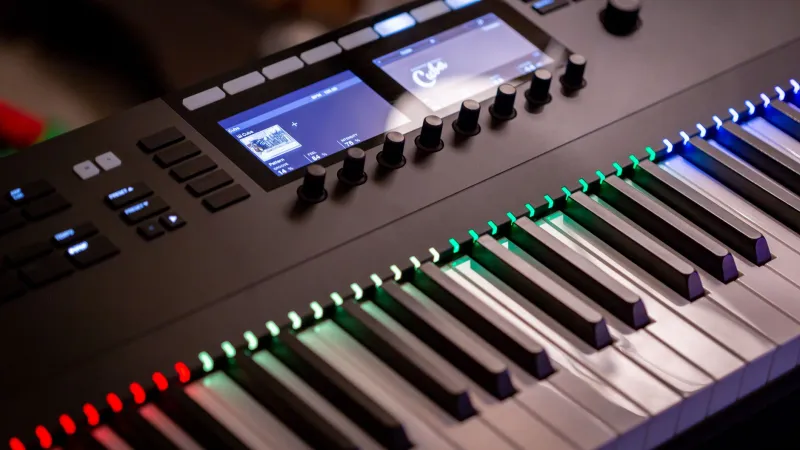
Record MIDI live and keep more of it. If you're a keyboard player or you have access to a pad controller, record performances in real time instead of drawing MIDI in the piano roll. You don't have to be a virtuoso. The slight imprecision in a live recording is often exactly what a track needs. Record multiple takes and comp the feel rather than the perfection.
Use LFOs and randomization on timing parameters. Some synths and plugins allow you to modulate note timing with an LFO or random source. Subtle, low-rate timing modulation on a repeating pattern can introduce the kind of organic variation that makes a loop feel like it's evolving rather than repeating.
Recalibrating Your Ears
The deeper issue here isn't technical. It's perceptual. After years of working with a quantize grid as your primary reference, your ears start to hear perfectly timed music as "correct" and anything else as a mistake. You have to actively retrain that instinct.
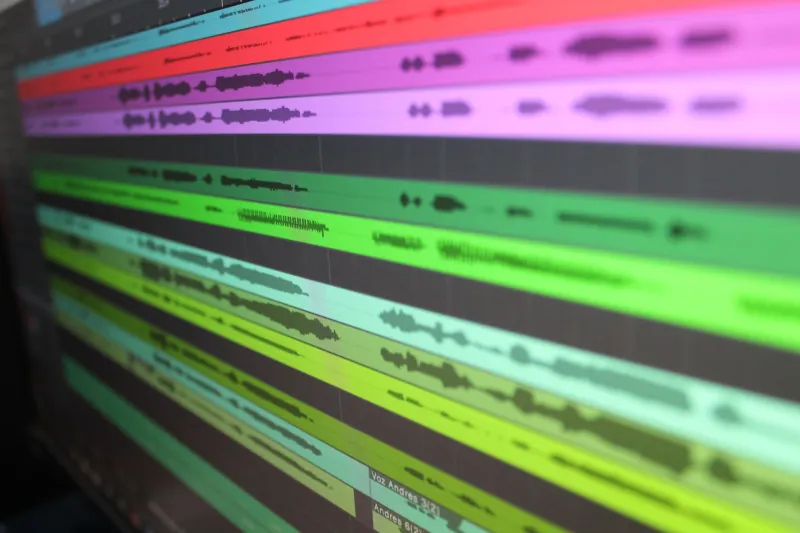
One exercise worth trying: pull up a track you love — something that feels good in your body when it plays — and zoom into the waveform. Look at where the transients actually land relative to the grid. You'll almost certainly find that the things making the track feel good are the things that are slightly off from where the grid says they should be.
The grid is a tool. A useful one. But music that only exists inside its lines tends to stay there — technically perfect, emotionally flat, and completely forgettable.
The best tracks don't just tick. They breathe, stutter, push, and pull. They feel like something made them. And something did — the controlled, intentional decision to let go of the grid just enough to let the music find its own time.