Mixing with Your Eyes Shut: Why What You See on Screen Is Quietly Sabotaging What You Hear
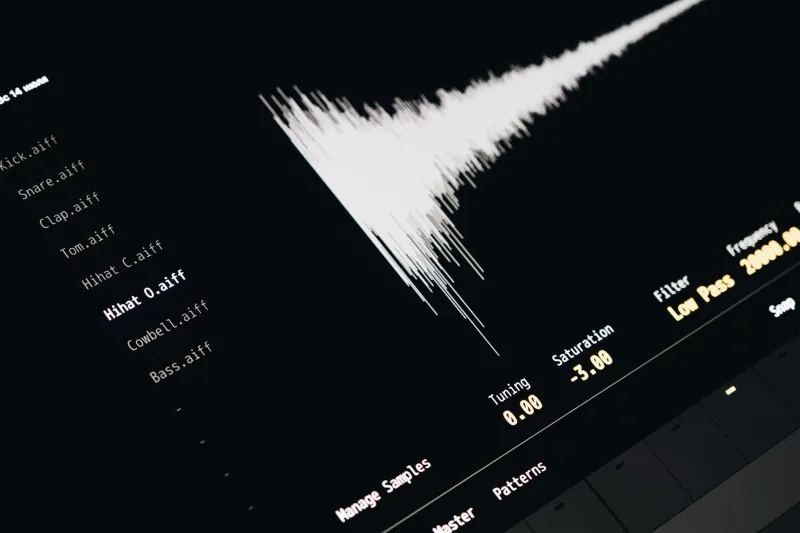
There's a moment most producers know well. You're deep in a mix, everything feels like it's sitting right, and then you glance at the spectrum analyzer. Suddenly there's a hump around 400Hz that you didn't notice before — or maybe a high-end shelf that looks a little thin. So you reach for the EQ. Not because something bothered your ears. Because something bothered your eyes.
That's the trap. And if you've been producing for more than a few months, you've probably fallen into it more times than you'd care to admit.
The Screen Took Over the Studio
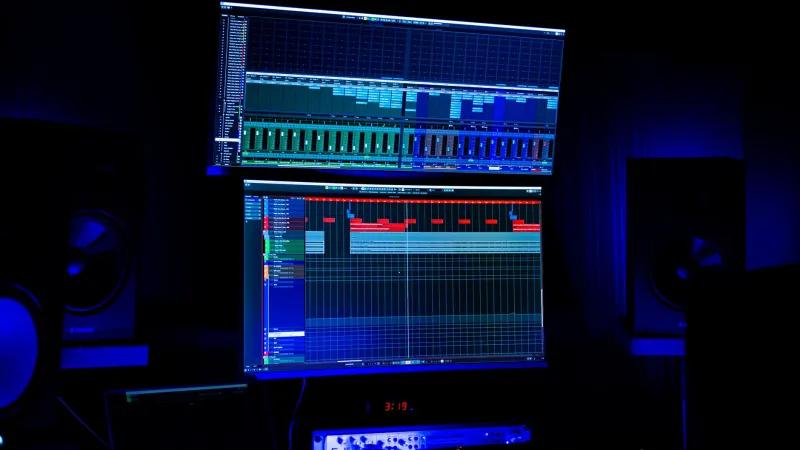
Visual feedback tools — spectrum analyzers, RMS meters, LUFS displays, waveform editors, spectrograms — are genuinely useful. Nobody's arguing that. But there's a difference between using a meter to confirm what you already suspect and using a meter to decide what you hear. Somewhere along the way, a lot of us drifted from the first approach to the second without even noticing.
The psychology here is pretty well-documented. Humans are wired to prioritize visual information when it conflicts with other sensory input. There's even a name for it: visual dominance. In the context of audio production, that means your brain will often trust what it sees on a plugin GUI over what your ears are actually registering. The visual cortex is just louder, neurologically speaking, than the auditory cortex in most people.
Researchers studying this in broader audio contexts — including some work out of music cognition labs — have found that listeners consistently rate the same audio differently depending on what visual information they're given alongside it. Show someone a waveform that looks loud and busy, and they'll often perceive it as more energetic even when the actual audio is identical to a quieter-looking version. That's not a production problem. That's a human problem. But it becomes a production problem the second you open a DAW.
The Analyzer Isn't Neutral
Here's something worth sitting with: your spectrum analyzer doesn't hear your music. It measures it. Those are not the same thing.
A flat-looking frequency response curve doesn't mean your mix sounds balanced. It means the energy is distributed evenly across the spectrum, which is a completely different thing from sounding good. Some of the most legendary records in electronic music history — talk to any serious collector at a record fair and they'll back this up — measure terribly. They're phase-weird, frequency-lumpy, dynamically inconsistent. And they sound incredible.
Conversely, plenty of technically pristine mixes — the kind where every plugin GUI looks textbook-perfect — are boring as hell to actually listen to. They're optimized for the screen, not the room.
The danger is that analyzers create a kind of false authority. You see a red peak and you react to it, even if you couldn't hear the problem before you looked. You see a gap in the 2-3kHz range and you fill it, even if the mix had a nice open quality that you were happy with thirty seconds ago. The tool starts making decisions instead of informing them.
Blind Tests Don't Lie
Blind listening — evaluating audio without any visual reference — consistently reveals how much visual context shapes our perception. Studio engineers who do A/B tests without looking at the screen regularly report surprise at which version they prefer, often choosing the one that measured worse. Producers who run their own informal blind tests on mix decisions frequently find that the "problem" they saw on the analyzer wasn't something they could reliably identify by ear alone.
This isn't a knock on experienced engineers — it's the same for veterans as it is for beginners. The visual bias runs deep regardless of skill level. The difference is that experienced producers learn to recognize when they're reacting to the screen and course-correct. That's a skill you have to actively develop. It doesn't come naturally.
There are some practical ways to build it.
Practical Ways to Unhook Your Eyes
Hide the meters during creative decisions. Most DAWs let you resize or close plugin windows after you've set initial parameters. Get in the habit of doing that. Set your EQ, then close the GUI and just listen. If it sounds right, it is right. Open the window again only if you're troubleshooting something specific you can already hear.
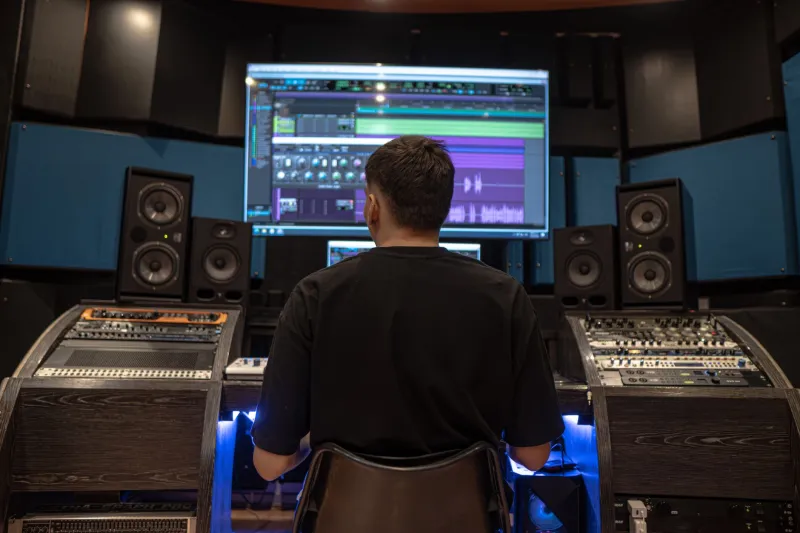
Mix in the dark — literally. Or at least with your monitor turned away. Some producers swear by closing their eyes during playback passes. It sounds almost comically simple, but removing the visual stimulus genuinely shifts how you process the audio. Try it on a mix you think is finished. You'll notice things you missed.
Build a reference ear, not a reference screen. Instead of pulling up a reference track and stacking it against your spectrum analyzer, just listen to the two back-to-back. What do you feel is different? Where does the energy seem to sit differently in the room? Training your ears to make comparative judgments without the visual crutch is a long game, but it pays off.
Set loudness targets before you start, then ignore the meter. Decide on your LUFS target at the start of a session, dial it in with your limiter, and then stop looking at the number. Mix for feel. Check the meter at the end to see how close you landed. Over time, you'll develop an intuitive sense for level that doesn't require constant visual confirmation.
Do intentional blind A/B tests on your own work. Before committing to a mix decision — especially an EQ or compression move — render two versions and listen without knowing which is which. It's a little tedious to set up, but the results are humbling and educational in equal measure.
The Bigger Picture
This isn't about throwing your analyzer in the trash. Metering tools are genuinely valuable for catching technical problems, hitting delivery specs, and troubleshooting issues that are hard to localize by ear. The issue isn't the tool — it's the workflow that puts the tool in charge.
The best mixes come from people who use visual feedback to confirm what they hear, not to discover what they should hear. That's a subtle distinction, but it changes everything about how you approach a session.
Electronic music, more than almost any other genre, lives and dies by feel. The genres we care about here — the weird, the experimental, the underground stuff that doesn't get playlist placement but does get passed around on USB drives at warehouse parties — those sounds were built by people chasing something they heard in their heads, not something that looked right on a screen.
Your ears got you into this. Don't let a plugin GUI talk you out of trusting them.