Your Ears Lie to You Differently Every Hour: The Case for Adaptive Mixing
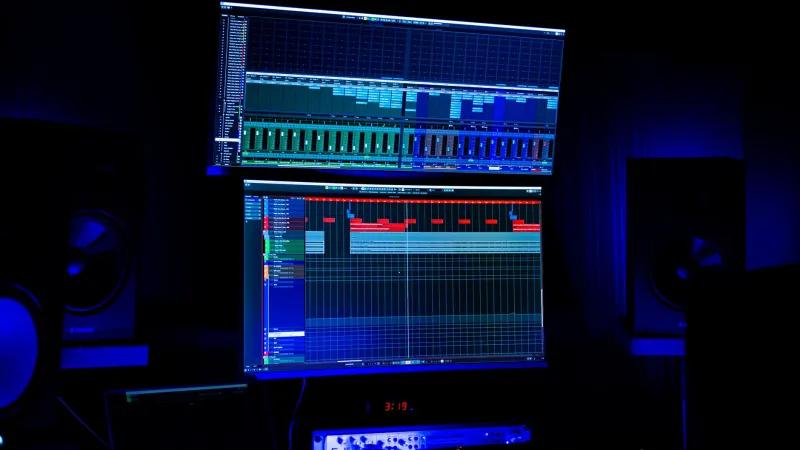
Every producer has been there. You spend three hours dialing in a mix that sounds absolutely right in your studio, then you throw it on your car speakers during a morning commute and suddenly the low mids are swamping everything. Or you play it loud at a friend's apartment at midnight and the high end feels like a dentist drill. Nothing changed in the file. So what gives?
The answer isn't your gear. It's biology—and a little bit of physics.
Human hearing is not a static, reliable instrument. It shifts constantly depending on factors most producers never think about: the time of day you're listening, how old the person on the other end is, whether they're in a quiet room or a noisy subway car. If you're mixing to a fixed target—some idealized frequency response curve you read about in a forum post—you're essentially designing a suit for a person whose measurements you've never taken.
Underground electronic music, in particular, has a problem here. Its listeners are scattered across wildly different contexts. Someone might catch your latest release on earbuds while walking through a city, on a proper sound system at a warehouse party, or through a laptop speaker at 2am. That's not one listening environment. That's five different ones. And your mix is going to behave differently in all of them.
The Equal-Loudness Problem Nobody Talks About
Back in the 1930s, researchers Fletcher and Munson mapped out something called equal-loudness contours—basically a chart showing how the human ear perceives loudness differently across the frequency spectrum at different volume levels. The short version: at low volumes, we're much less sensitive to bass and treble than we are to the midrange. Crank the volume up and those extremes start to feel more balanced.
This is the foundation of the old 'mix at low volumes' advice. And it's not wrong, exactly. But it's incomplete. What that advice doesn't account for is the fact that equal-loudness contours aren't fixed across all listeners, all hours, or all environments.
Listen to music at 7am after waking up and your auditory system is still warming up. Cochlear sensitivity tends to be slightly heightened in the morning, which means harsh high frequencies hit harder before you've had your coffee. Mix something at 11pm when your ears are fatigued from a day of noise exposure and you'll likely undercompensate for treble because your system has already tuned it down. These aren't dramatic shifts, but in a genre where the difference between a good mix and a transcendent one lives in tiny decisions, they matter.
Age Is a Low-Pass Filter
Here's something that doesn't get enough airtime in production circles: your target audience's hearing range is probably not the same as yours. High-frequency hearing loss starts earlier than most people expect—often in the mid-20s for people who've been to a lot of loud shows or spent years mixing on headphones at high volumes. By the time someone's in their late 30s or 40s, they may be missing meaningful information above 14kHz or even lower.
For experimental and electronic music, this is a real consideration. A lot of the texture in ambient, IDM, and noise-adjacent work lives in the upper registers. If you're mixing for a younger audience at a club in Brooklyn or a festival crowd in Austin, you've got more headroom to push that high-end shimmer. If your releases are landing with a more seasoned collector crowd—people buying limited vinyl pressings or following labels that have been around since the early aughts—you might want to think carefully about whether all that air in your mix is actually reaching them.
This isn't about dumbing anything down. It's about knowing your audience the way a good communicator knows their room.
Environment Is the Third Variable
Beyond biology, there's the listening environment itself. Bass frequencies behave completely differently in a small apartment versus a large venue. Room modes—those standing waves that build up at specific frequencies based on room dimensions—mean that a mix that sounds perfectly balanced in your studio might have a 200Hz buildup that turns to mud in someone else's space.
Streaming has made this more complicated, not less. Your release might be the first thing someone plays on a brand-new pair of Sony headphones that boost around 100Hz and 8kHz by design. Or it might be playing through a mono Bluetooth speaker that rolls off everything below 200Hz. Spotify, Apple Music, and Tidal all apply their own loudness normalization algorithms on top of that. The signal chain between your mix and someone's ears has never been more unpredictable.
So what do you actually do with all of this?
Practical Adaptive Mixing Strategies
First, stop mixing in one environment and calling it done. Serious producers do this anyway—checking mixes in the car, on earbuds, on a laptop speaker—but the key is to take notes at each stage and understand why something sounds different, not just that it does. Is the bass disappearing on earbuds because the drivers can't reproduce it, or because you low-cut too aggressively? Is the top end harsh on your monitors because of the mix or because your room is reflecting at that frequency?
Second, consider the time of day you're doing your critical listening. If you consistently do your final mix checks late at night with tired ears, you're probably under-correcting for high frequencies. Try revisiting key decisions in the morning with fresh ears and see if your conclusions hold up.
Third, think about your actual audience when making EQ decisions. If you're releasing on a label that caters to older collectors, a mix that's slightly more mid-forward and less dependent on extreme high-frequency content might translate better across that demographic. If you're making music for festival floors where the system can handle serious sub-bass, you've got room to push low end that a typical home listener might never fully experience anyway.
Finally, reference tracks are your friend—but choose them carefully. Don't just pick whatever's charting. Find releases that are actually being played in the same contexts where your music will land. If your stuff belongs in a late-night techno set at a small club, reference against records that thrive in that environment.
Ditch the Perfect Curve
The idea that there's a single correct frequency balance for any mix is a convenience myth. It simplifies a complicated reality into something you can stare at on a spectrum analyzer and feel good about. But human hearing doesn't care about your analyzer. It cares about the room, the time, the age of the listener, and the thousand other variables that shape how sound lands in a real person's head.
The producers who understand this—who mix adaptively rather than to a fixed target—are the ones whose work holds up everywhere it gets played. That's not luck. That's treating psychoacoustics as a tool rather than a footnote.
Your ears lie to you. The goal is to know exactly how they're lying and account for it.