Too Many Cooks, Zero Tracks: The Hidden Cost of Remote Collaboration Culture
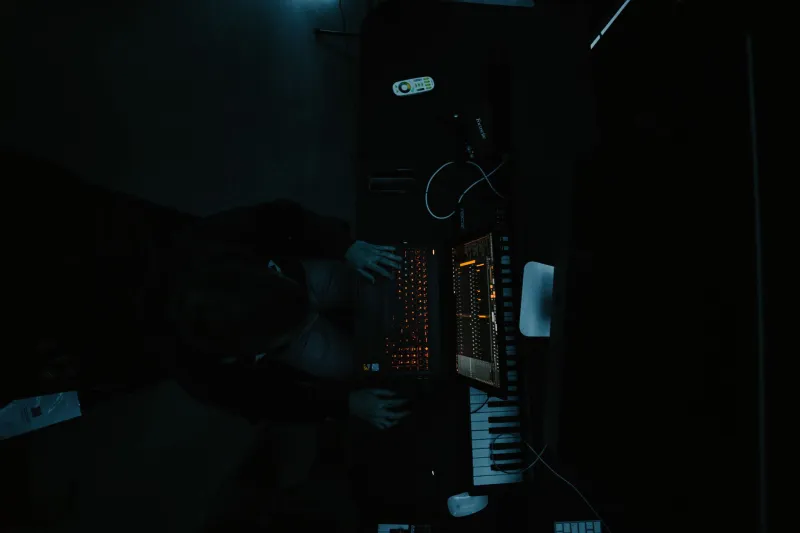
There's a folder on a lot of producers' hard drives that nobody talks about. It's got names like "collab_with_derek_v3_FINAL" and "jose_session_export_march." The timestamps stretch back years. None of those files ever went anywhere.
Remote collaboration was supposed to be the great equalizer. Got a bedroom setup in Tulsa? Link up with someone in Detroit. Running a modular rig in Portland? Trade stems with a sound designer in Brooklyn. The tools are there—file sharing, cloud DAWs, session link software, Discord servers built around nothing but swapping loops. The access is real. The output? A lot less so.
The underground electronic world has been drowning in unfinished collaborations for years now, and almost nobody's talking about why.
Why Collabs Feel So Good at the Start (And Fall Apart So Fast)
Here's the thing about starting a new collab: it hits like a new piece of gear. The energy is high, the possibilities feel wide open, and for a minute you're both firing on all cylinders. Someone sends a rough sketch, the other person layers something wild on top, and suddenly you're messaging each other at midnight like you're about to change the game.
Then real life shows up.
Someone gets busy with a day job. The other person starts a different project. The file sits in a shared folder for three weeks. When you finally open it again, the energy is gone—and worse, you can't even remember what you were going for in the first place. The collab doesn't die dramatically. It just... stops breathing.
Psychologists have a name for this kind of momentum collapse: task discontinuity. When there's no external structure forcing you back to a shared goal, the brain quietly deprioritizes it every single time something more urgent shows up. And for independent producers who are also juggling rent, gigs, label admin, social media, and their own solo work, "something more urgent" shows up constantly.
Add in the fact that most online collabs are formed between people who've never actually met—maybe they connected through a forum, a Discord, or a comment section—and you've got a relationship built entirely on enthusiasm with no real accountability underneath it.
The Etiquette Vacuum Nobody Prepared You For
In-person studio sessions have built-in social pressure. You show up, you work, you don't waste each other's time because you're literally in the same room. Remote work strips all of that out. There's no awkwardness about leaving early. There's no moment where you look at someone across the console and realize you need to make a decision right now.
Instead, you get a slow drip of messages that get less frequent over time. "Hey, did you get a chance to look at those stems?" "Yeah, been slammed—maybe this weekend." That weekend becomes the next. Neither person is being malicious. Both people are just... drifting.
The underground electronic scene has an added layer of complexity here. A lot of experimental producers are fiercely protective of their creative identity. That's not a knock—it's actually part of what makes the music interesting. But when you're collaborating with someone whose aesthetic runs parallel to yours rather than identical, the negotiation over direction can get murky fast. Who owns the track? Whose sound is dominant? What genre does this even live in? Without a framework to answer those questions upfront, creative friction quietly becomes creative paralysis.
What Actually Ships (And Why)
Look at the collab projects in underground electronic music that actually made it to release—the ones that ended up on Bandcamp, on a limited run label, or even just as a proper digital drop—and you'll notice some patterns.
First, there was usually a clear initiator. One person owned the project creatively, even if the contributions were equal. Someone was steering. Without that, both parties spend energy trying to read each other's intentions instead of just building.
Second, the timeline was short and specific. Not "let's finish this eventually" but "I want to have something done by the end of the month." Arbitrary deadlines feel corporate when someone else sets them for you, but when you set them collaboratively with someone you respect, they function more like a shared commitment than a mandate.
Third—and this one's underrated—the people involved already had a shared reference pool. They weren't discovering each other's taste in real time while also trying to build something. They'd already traded playlists, talked about influences, maybe even workshopped ideas in a Discord voice chat before a single file changed hands. That groundwork matters more than most producers realize.
Practical Moves for Collabs That Don't Ghost Themselves
If you want to actually ship something with another producer, here's what tends to work in the real world:
Set a scope before you start. Is this a single? An EP? A one-off experiment? Knowing the endpoint keeps the project from expanding into something neither of you can finish.
Establish roles explicitly. Who's handling the arrangement? Who owns the mix? Who's responsible for getting it mastered and out? Ambiguity is where collabs go to die.
Build in a check-in rhythm. Not a formal meeting—just a standing "hey, where are we?" moment every week or two. Keep it casual. The point isn't accountability theater; it's just keeping the thread alive.
Agree on what "done" looks like. A lot of collabs collapse not because people stop caring but because they never agreed on what finishing actually means. Is it a polished release? A rough demo? Knowing that in advance prevents the endless revision spiral that kills momentum.
Give yourself an exit clause. If either person needs to tap out, what happens to the files? This sounds harsh to negotiate upfront, but it's way less awkward than having it come up when someone's already checked out emotionally.
The Frequency of the Problem
At Ultrasonic, we spend a lot of time thinking about what actually gets made versus what almost gets made. The underground electronic space is full of potential that never converts—ideas that had real energy and real talent behind them but no structure to carry them through.
Remote collaboration isn't a bad idea. Some genuinely killer music has come out of producers who've never been in the same room. But the tools don't do the relationship work for you. Software can sync stems across time zones; it can't sync two people's creative priorities or their sense of responsibility to a shared project.
The producers who consistently finish collabs aren't the ones with the best gear or the fastest internet. They're the ones who treat a collaboration like a small creative business arrangement—informal enough to stay fun, structured enough to actually land.
Your hard drive doesn't need another folder with someone's name in it. It needs a release date.