Waveform Wanted: How Spectral Fingerprinting Is Turning Copyright Law Into a Sonic Dragnet
There's a particular kind of frustration that hits different when it comes from a machine. You spend weeks rebuilding a sample from scratch — chopping it beyond recognition, running it through granular synthesis, pitching it into a completely different key, layering it under a wall of noise — and within forty-eight hours of upload, a bot tells you it belongs to someone else. No appeal pending. Revenue already redirected. Your experimental derivation, flagged and monetized before a single human ear confirmed the match.
This isn't a hypothetical. It's Tuesday for a lot of independent producers right now.
What Spectral Fingerprinting Actually Does
Most people are familiar with the basic idea of audio fingerprinting — platforms like YouTube's Content ID and Spotify's backend systems create a kind of acoustic signature for a recording and check new uploads against a database of those signatures. Simple enough in theory.
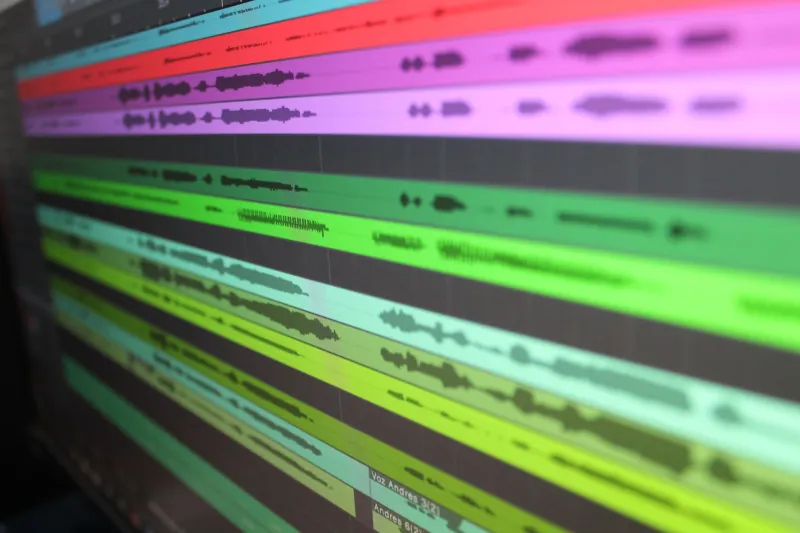
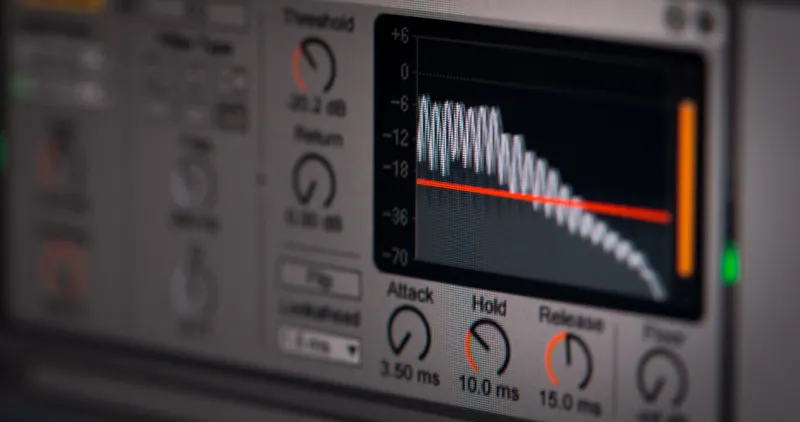
But the technology has evolved well past matching waveforms at the surface level. Modern spectral analysis tools break audio down into its frequency components over time, essentially generating a visual map of every sonic event in a track — what's happening at 80Hz versus 8kHz, how those relationships shift from second to second, where the transients land, how harmonics stack. The fingerprint isn't just "this sounds like that song." It's more like: "this cluster of frequency relationships, at this temporal spacing, matches this registered source material within a statistically significant threshold."
For legitimate enforcement against straight-up piracy, that's genuinely impressive. For experimental producers working in transformative territory, it's a nightmare.
The Gray Zone Gets Grayer
Here's where the legal and technical worlds start pulling in opposite directions. U.S. copyright law has a well-established — if perpetually contested — doctrine of fair use, which allows for transformative works, commentary, parody, and certain educational uses. Courts have generally recognized that creative transformation matters. A two-second sample pitched down, reversed, and buried in a drone texture is not the same legal object as the original recording it came from.
Spectral fingerprinting doesn't care about transformation. It cares about frequency relationships. And because those relationships can survive a remarkable amount of processing — pitch shifting, time stretching, even some spectral morphing — the algorithm can flag a track that would almost certainly survive a fair use challenge if it ever reached a courtroom. The problem is it never does. The claim fires automatically, the producer either disputes it through a platform's internal process (which often feels less like a legal proceeding and more like filing a complaint with the company that wronged you in the first place) or they don't bother, and the rights holder collects.
The system is built to resolve these disputes quietly and quickly. That works great for the rights holders. Not so great for the independent producer who just got their experimental ambient piece claimed because it contains the ghost of a hi-hat pattern that appeared on a major label release three years ago.
The Evasion Arms Race
Predictably, producers have started fighting back — technically, if not legally. Forums and Discord servers in the experimental and electronic underground are full of discussions about processing chains designed specifically to defeat spectral matching: extreme pitch modulation, convolution reverb that smears transient information, formant shifting, even deliberate introduction of noise at specific frequency bands to confuse fingerprint databases.
Some producers are running source material through hardware signal processors that introduce the kind of analog artifacts — wow, flutter, harmonic saturation — that digital fingerprinting struggles to account for. Others are leaning into granular synthesis specifically because it atomizes audio into fragments small enough that the reassembled result shares almost no spectral DNA with the original.
It's a genuine technical arms race, and the uncomfortable truth is that the platforms have more resources to escalate it than individual producers do. Every time a workaround becomes widely known, the detection systems get updated. Every time a new spectral analysis technique gets deployed, another batch of producers discovers their back catalog has been swept up in it.
Who Wins When Nobody Listens?
The deeper problem here isn't just technical — it's philosophical. Copyright enforcement has always involved human judgment, even when that judgment was imperfect or biased. A lawyer or A&R rep listening to a disputed track could at least engage with the question of whether something was genuinely transformative. Automated spectral matching removes that judgment entirely and replaces it with a statistical threshold.
That matters a lot for experimental and electronic music specifically, because the entire tradition of the genre is built on transformation, appropriation, and recontextualization. Musique concrète, sampling culture, plunderphonics, vaporwave — these aren't edge cases in music history. They're foundational movements. The idea that a sufficiently sophisticated algorithm could have flagged half of what made hip-hop what it is, or what made early electronic music what it is, should give everyone pause.
Right now, the producers most at risk are the ones with the least institutional protection: small labels, bedroom producers, experimental artists with no legal budget and no label infrastructure to push back. The major label acts that Content ID was theoretically built to protect can absorb a disputed claim or fight it. The artist releasing a 200-copy tape run through Bandcamp cannot.
What Independent Producers Can Actually Do
None of this has a clean solution, but there are practical steps worth knowing. Documenting your production process matters — timestamps, project files, sample logs — because if a claim does escalate, evidence of original creation is your strongest argument. Understanding the platform-specific dispute processes before you need them is also worth the time; YouTube's Content ID dispute window is short, and missing it costs you options.
For producers who are working in genuinely transformative territory and want some legal grounding to stand on, organizations like the Electronic Frontier Foundation have published resources on fair use in music, and there are entertainment lawyers who specialize in exactly this kind of dispute, some of whom work on sliding-scale fees for independent artists.
The harder truth is that the law and the technology are moving at different speeds, and for now, the technology is winning. Spectral fingerprinting will only get more precise. The database of registered source material will only grow. And the gap between what's legally transformative and what a bot decides to flag will stay wide open.
For producers living in that gap, the work continues — just with one more obstacle between the idea and the audience.