More Knobs, More Problems: How Gear Hoarding Is Quietly Strangling Your Creative Output

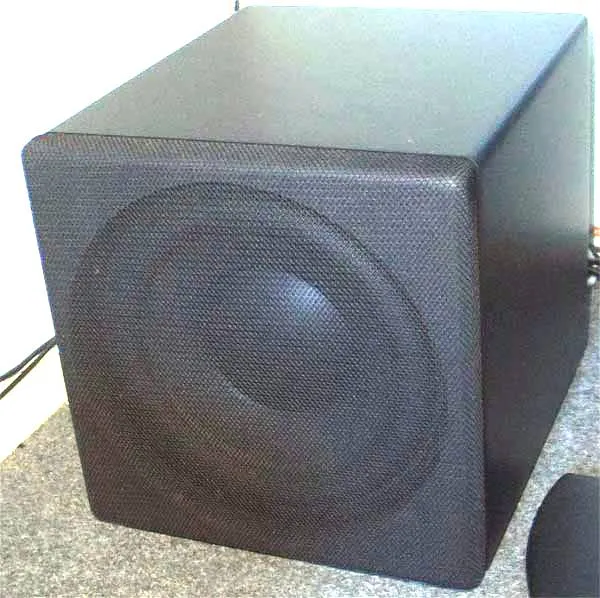
Photo: Whitman Bailey, Public domain, via Wikimedia Commons
There's a particular kind of paralysis that sets in around 2 a.m. when you're staring at a studio desk covered in half-patched Eurorack modules, three different DAWs open on your laptop, and a MIDI controller you bought six months ago still in the box. You meant to make music tonight. Instead, you spent three hours watching YouTube reviews of a reverb plugin you definitely don't need.
Sound familiar? You're not alone — and you're not lazy. You might just be caught in what producers are increasingly calling the gear trap: a cycle where the pursuit of tools becomes a substitute for the actual work of making music.
The Dopamine Loop Nobody Talks About
Here's the uncomfortable truth: buying gear feels creative. The anticipation, the unboxing, the first few hours of exploration — it all mimics the emotional high of finishing a track. Your brain doesn't always know the difference. Neuroscientists studying reward behavior have documented how the expectation of a reward can be just as stimulating as the reward itself, sometimes more so. For producers, this means the Amazon cart full of new plug-ins can scratch the same itch as actually sitting down and finishing something.
The electronic music community — especially the experimental and underground corners of it — is particularly vulnerable to this loop. The genre practically runs on technology. New synthesis techniques, novel hardware configurations, software that does things nobody's done before: these aren't just toys, they're legitimately part of the art form. The line between "essential research" and "avoidance behavior" gets blurry fast.
Producer and sound designer Marcus Reilly, who runs a small modular synthesis channel out of Portland, put it plainly: "I had a point where I owned probably $15,000 worth of modules and I was making less music than when I had a single synth and a four-track. The setup was incredible. I just never finished anything because there was always something to tweak."
When the Studio Becomes a Museum
There's a meaningful difference between a working studio and a collection. Collections are curated, preserved, admired. Working studios are messy, opinionated, and built around constraints. The most productive creative environments — from hip-hop beatmakers to noise experimenters — tend to share one trait: limitation by design.
Not limitation by poverty, though plenty of legendary music was made that way too. Limitation by choice. Choosing to work within a defined set of tools forces you to develop genuine fluency with what you have rather than constantly onboarding something new.
Chicago-based producer Deja Voss, who releases ambient and industrial work under the name Pale Static, describes her turning point: "I sold about 70 percent of my gear two years ago. Kept a laptop, two hardware synths, and a field recorder. That year I put out more music than the previous four years combined. The limitations weren't limiting — they were liberating."
This isn't a new idea. Brian Eno and Peter Schmidt's Oblique Strategies cards were built on the concept of productive constraint. Aphex Twin has talked about the value of working with broken or limited equipment. The mythology of electronic music is full of artists who made genre-defining work with a single machine. But somehow, the gear acquisition cycle keeps pulling people back in.
The False Promise of the Perfect Signal Chain
Part of what drives the trap is a specific fantasy: that somewhere out there is the perfect combination of tools that will make your music sound exactly how you hear it in your head. This is one of the most seductive and destructive myths in music production.
The gap between what you imagine and what you can currently execute isn't primarily a gear problem. It's a skills problem. And skills only develop through repetition with consistent tools. Every time you swap out a synthesizer or switch DAWs, you reset part of that learning curve. You stay a perpetual beginner, always onboarding, never mastering.
This doesn't mean never upgrading or experimenting. It means being honest about why you're doing it. Ask yourself: Is this filling a genuine sonic gap in my work, or am I just bored? Am I avoiding a difficult creative problem by shopping instead of solving it?
A Framework for Smarter Gear Decisions
If you're ready to break the cycle without going full minimalist monk, here are some practical questions to run through before any purchase:
1. Can you name three specific things you'd make with it right now? Not vague possibilities — actual tracks, sounds, or techniques you're actively trying to achieve. If you can't name three, the timing isn't right.
2. Have you maxed out what your current tools can do? Most producers are using maybe 30 percent of their existing software's capabilities. Before adding, go deeper.
3. Is this solving a problem or creating a new one to solve? A new piece of gear always comes with a learning curve, integration time, and mental overhead. Factor that in honestly.
4. What's the opportunity cost? The $400 you'd spend on a new effects unit could fund a mastering session, a collaboration, or a vinyl pressing run. Which one actually moves your music forward?
The Radical Act of Finishing Things
Ultimately, the most subversive thing a bedroom producer can do in a culture obsessed with gear is finish tracks. Not perfect them — finish them. Ship them. Let them be imperfect and real and done.
The experimental electronic underground has always thrived on doing more with less, on finding strange beauty in constraint and accident. That ethos doesn't square with a perpetually expanding gear list and a folder full of unfinished projects.
Scale back. Get weird with what you have. The frequencies you're looking for might already be in the room — you just can't hear them over the notification sound of another gear review.