Old Iron, New Gold: Navigating the Inflated Vintage Synth Market Without Getting Burned
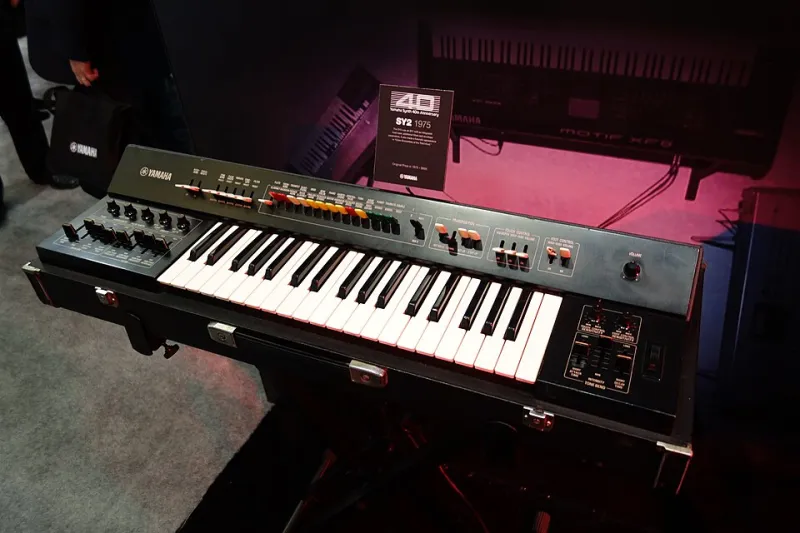
Photo: Pete Brown from Gambrills, MD, USA, CC BY 2.0, via Wikimedia Commons
Somebody out there just paid $4,200 for a Roland Juno-106. It needs new slider caps, one oscillator drifts, and the previous owner stored it in a garage in Phoenix for a decade. And yet — it sold. Within 48 hours of listing, no less.
If you've been shopping for vintage gear lately, none of that surprises you. The secondhand synth market has gone genuinely, almost incomprehensibly, hot. Machines that were gathering dust at Guitar Center trade-ins a decade ago now command prices that would make a reasonable person flinch. So what's driving this? And more importantly — if you're an experimental producer trying to build a rig that actually sounds interesting, does any of it make sense for your wallet?
Let's dig in.
How We Got Here: The Perfect Storm Behind the Price Surge
The vintage synth explosion didn't happen overnight. It's been building for a while, but a few forces converged in the last five or six years to really send things into overdrive.
First, there's the streaming-era nostalgia loop. Artists who grew up hearing analog warmth in the music of the '80s and early '90s — that fat low end, those slightly imperfect filter sweeps — started actively chasing those sounds as they built their own studios. That demand filtered up through bedroom producers into professional studios, and suddenly everyone wanted the real thing.
Then COVID happened. Stuck at home, musicians with disposable income started spending it on gear. eBay, Reverb, and Craigslist listings got picked clean. Prices that had been stable for years jumped 30, 40, sometimes 60 percent almost overnight.
Layered on top of that is the collector dynamic, which is its own beast entirely. Just like rare sneakers or vintage guitars, synthesizers have attracted a class of buyer who isn't primarily interested in making music. They're interested in owning something scarce. A pristine Oberheim OB-Xa becomes an asset, not a tool. That speculation inflates prices for everyone, including the producers who actually want to use the thing.
Finally — and this one's sneaky — YouTube did a lot of this. Gear demos from channels with massive followings turned certain instruments into cultural objects. Once a synth gets enough screen time and the right musicians attach their names to it, the price follows like gravity.
Spotting the Real Score vs. the Hype Tax
Here's the uncomfortable truth: a lot of what's listed as "vintage" in 2025 is just old. Age alone doesn't equal value, and it definitely doesn't equal sonic quality. Plenty of instruments from the '80s and '90s were mediocre when they shipped, and time hasn't improved them.
So how do you tell the difference?
Know the service history. Vintage analog hardware has a lifespan. Capacitors degrade, voice chips fail, pitch calibration drifts. A synth that hasn't been serviced in 20 years is a project, not a plug-and-play instrument. Always ask for documentation, and if the seller can't tell you anything about its maintenance history, price that risk accordingly.
Understand which chips actually matter. Certain discontinued components — the CEM and SSM chips used in a lot of classic polysynths, for instance — are genuinely irreplaceable in the traditional sense, though some modern reproductions now exist. The scarcity of those parts is real and does contribute to value. Other "vintage" instruments use perfectly common components and have no such excuse for their price tags.
Cross-reference before you commit. Reverb.com's price history tool is genuinely useful here. You can see what a specific model has actually sold for over time, not just what sellers are asking. There's often a meaningful gap between listed price and sale price, especially as the market softens from its COVID-era peak.
Watch out for the hype cycle. When a particular synth shows up in a major artist's live rig photos or gets featured in a big-name producer's studio tour, its price spikes within weeks. That spike is almost never justified by a sudden change in what the instrument can do — it's pure cultural momentum. If you can wait it out, you often can.
Does Vintage Actually Sound Better? An Honest Answer
This is the question underneath all the others, and it deserves a straight answer: sometimes, meaningfully — and sometimes not at all.
Genuine analog circuits have real, measurable characteristics that digital emulation still struggles to fully replicate. Component tolerances, thermal drift, the way an analog filter saturates under load — these things produce a kind of organic unpredictability that can be genuinely inspiring, especially for experimental work. If you're building textured soundscapes or trying to find sounds that feel alive rather than calculated, a well-maintained vintage analog instrument can absolutely justify its premium.
But — and this is a big but — the gap between vintage hardware and a quality modern digital alternative has narrowed dramatically. Software like u-he Diva, Arturia's V Collection, and Korg's software lineup are doing things that would have been unthinkable even ten years ago. For a producer on a tight budget, $200 in plugins can get you genuinely close to sounds that would cost $3,000 in vintage iron.
Modern hardware is also worth serious consideration. Behringer's clones are controversial, but they're functional. Sequential, Moog, and Korg have all released new hardware that captures the spirit of their classic designs with modern reliability and warranty support. These aren't the same as the originals, but they're not pretending to be museum pieces either — they're tools built to be used.
The Practical Calculus for Experimental Producers
If your primary goal is to make interesting, unconventional music — rather than to own a piece of synthesis history — the vintage market probably isn't your best use of money right now. The premium you're paying for age and scarcity is real, and a lot of it has nothing to do with sonic output.
That said, if you've got the budget, know what you're buying, and understand what you're getting into maintenance-wise, vintage gear remains genuinely rewarding. There's something about the physicality of a 40-year-old instrument — the weight of it, the way it responds to touch, the slight imperfections — that shapes how you play and what you make. That's not nothing.
The smartest approach right now is probably hybrid. A carefully chosen vintage piece or two, acquired patiently and with eyes open, combined with modern software and hardware that fills the gaps. You get the character without betting your entire gear budget on the market's next mood swing.
Just maybe skip that Phoenix Juno-106 until someone's actually looked inside it.